Tests used to detect parasites in pets, most commonly through fecal samples. Helps identify intestinal parasites like worms and protozoa, allowing for timely and effective treatment.
Ova and parasite examination by centrifugal fecal flotation with microscopic review, the preferred method for recovery of nematode and cestode eggs, coccidian oocysts, and Giardia cysts. Direct smear and sedimentation performed concurrently when indicated by sample consistency or clinical history, expanding recovery to trematode eggs and motile protozoa.
Fecal antigen detection for Giardia by enzyme-linked immunosorbent assay, recommended as a complement to ova and parasite examination given the intermittent cyst shedding that limits sensitivity of flotation alone.
ELISA detects antigen from both trophozoite and cyst stages, improving diagnostic yield in symptomatic patients with negative or equivocal microscopy.
Fecal flotation by centrifugation, the recommended method for routine screening and recovery of nematode eggs, cestode eggs, coccidian oocysts, and Giardia cysts. Centrifugal flotation offers meaningfully higher sensitivity than passive (gravitational) methods, particularly for low-burden infections and heavier eggs that resist passive flotation.
Comprehensive parasitology screen combining centrifugal fecal flotation, direct smear, and fecal culture in a single submission — the most thorough first-line work-up for dogs and cats presenting with diarrhea, weight loss, or nonspecific GI signs.
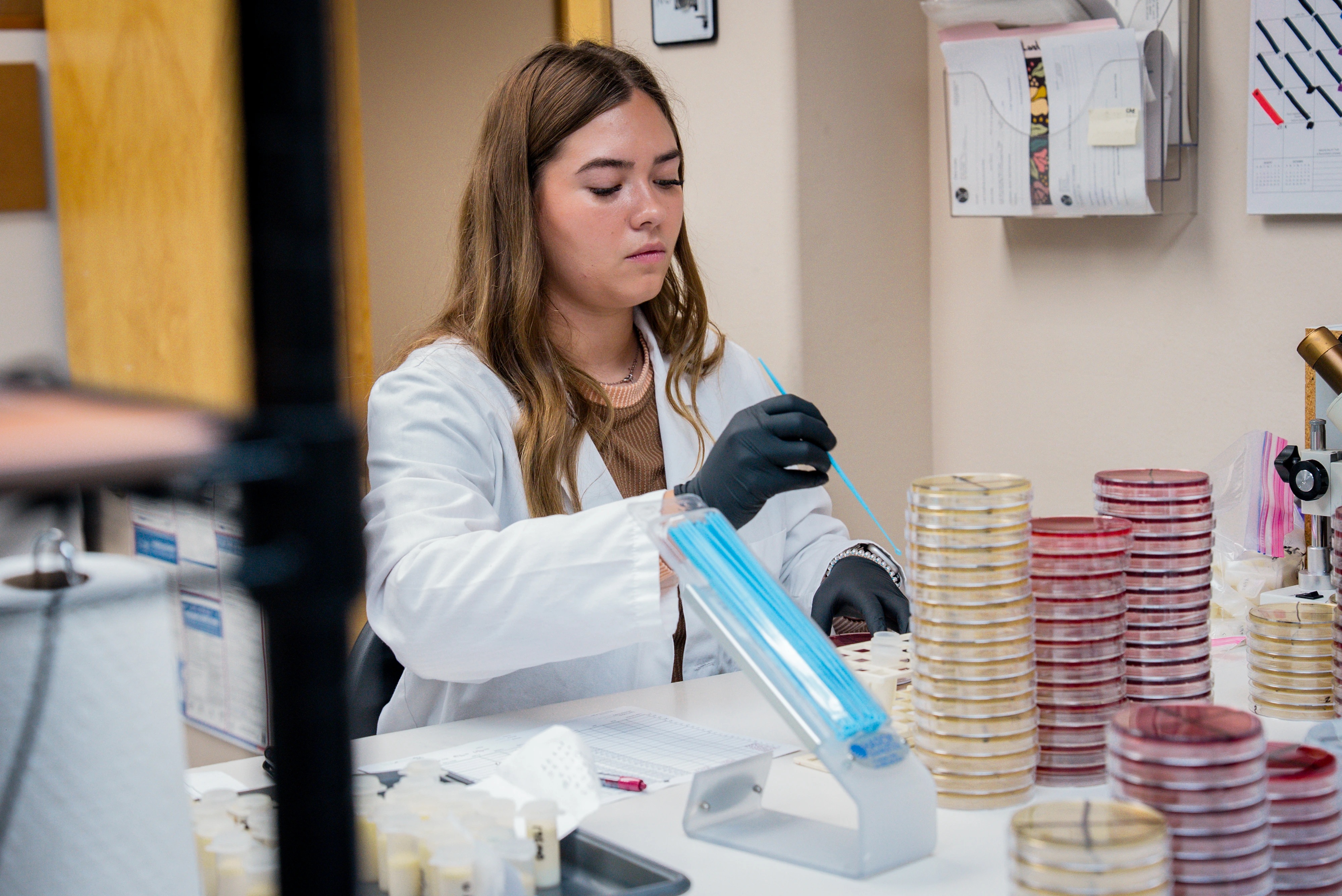


Your trusted lab for bacteriology culturing